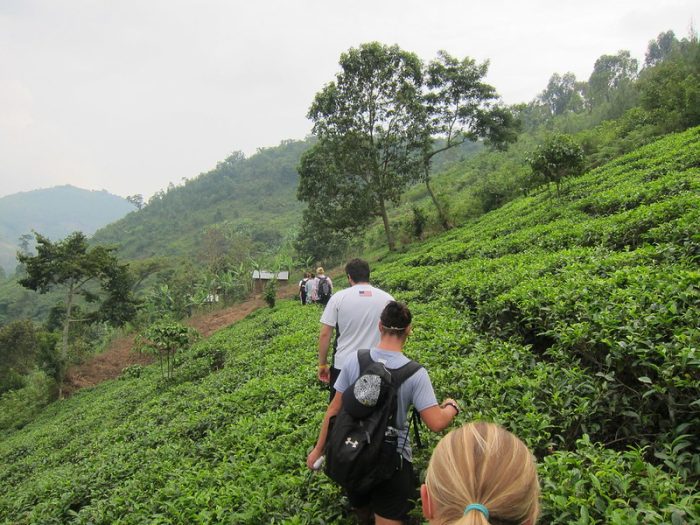
The first time I heard Uganda described as the “Pearl of Africa,” I honestly did not know what to expect. I had booked a gorilla trekking permit months in advance on the advice of a friend, and I arrived in Entebbe with a vague idea that I was about to do something special. What I was completely unprepared for was how physically demanding the trek would be, how long the drives between parks would take, how strict the entry requirements are, and how deeply the whole experience would affect me.
I remember standing in the forest at Bwindi at dawn, heart pounding, completely out of breath after two hours of climbing through dense undergrowth, when our tracker suddenly stopped and pointed silently into the trees. There they were. A silverback, enormous and perfectly calm, sitting not ten metres away. I could not speak. I could not move. That one hour I spent with that gorilla family changed something in me permanently. But there were things I really wish someone had told me before I got on the plane. Practical things, logistical things, things that would have made the trip smoother, safer, and even more rewarding. That is what this guide is for.
Inside This Guide
- Where is Uganda and how to get there
- The gorilla permit: what nobody tells you
- Visa and entry requirements in 2026
- Health, vaccinations and malaria
- When is the best time to visit Uganda for a safari
- Where to go in Uganda: the best national parks
- What first-timers get wrong about Uganda’s roads
- Is Uganda expensive to visit?
- What to pack for a Uganda safari
- Must-see wild animals in Uganda
- Top tips for staying safe on safari
- How to choose a reputable tour operator
- FAQs
WHERE IS UGANDA AND HOW TO GET THERE?
Uganda is a landlocked country in East Africa, sitting just north of the equator and bordered by Kenya to the east, Tanzania and Rwanda to the south, the Democratic Republic of Congo to the west, and South Sudan to the north. It covers approximately 241,000 square kilometres and holds more than half of the world’s remaining mountain gorilla population, a fact that alone makes it one of the most significant wildlife destinations on the planet.
The main international gateway is Entebbe International Airport (EBB), located on the northern shore of Lake Victoria about 40 kilometres southwest of Kampala. In 2026, direct flights from London to Entebbe are now available through Uganda Airlines, which is welcome news for British travellers. Connections from other major hubs including Amsterdam, Dubai, Nairobi, Addis Ababa, and Johannesburg are all well established. If you cannot find a direct flight, flying into Nairobi and connecting onward to Entebbe is a reliable alternative, the crossing takes under an hour by air.
Once you arrive at Entebbe, most first-time visitors spend a night nearby before heading out on their safari circuit. The airport immigration process typically takes between 45 minutes and two hours depending on flight timing, so landing in the evening and heading to a lodge in Entebbe or on the outskirts of Kampala is the sensible plan before any long road transfer begins the following morning.
THE GORILLA PERMIT: WHAT NOBODY TELLS YOU
I cannot stress this enough: booking your gorilla trekking permit is the very first thing you need to do when planning a Uganda safari. Before you book flights. Before you choose a lodge. Before anything else. This is the detail that catches almost every first-time visitor off guard, and the one I wish someone had hammered home to me far earlier in the planning process.
Here is the reality. Only eight people are allowed to visit any given gorilla family per day. Uganda has a limited number of habituated family groups across Bwindi Impenetrable National Park and Mgahinga Gorilla National Park. During the peak dry season months of June through September and December through February, permits sell out four to six months in advance. In 2026, a standard gorilla trekking permit costs $800 per person for foreign non-residents. This covers a single one-hour visit with a habituated gorilla family and includes the park entry fee for the day.
If you want the deeper experience, the Gorilla Habituation Experience is a four-hour visit with a family still being acclimatised to human presence. This costs $1,500 per person and is limited to just four people per day in specific sectors. Permits for the habituation experience can require up to twelve months of advance booking. Importantly, you cannot purchase these permits yourself. They are issued by the Uganda Wildlife Authority exclusively to licensed Ugandan tour operators, which is one of the core reasons why choosing a reputable local operator matters so much.
VISA AND ENTRY REQUIREMENTS IN 2026
Uganda completed its transition to a fully online e-visa system in 2026, and this is a change that every traveller needs to understand before they book. Visas are no longer issued upon arrival at Entebbe Airport. If you arrive without a pre-approved e-visa, you will be refused entry. There are no exceptions. Apply through the official Directorate of Citizenship and Immigration portal at least two to three weeks before your departure date.
A single-entry Uganda tourist visa costs $50 USD. If you are combining Uganda with Kenya and Rwanda, the East African Tourist Visa at $100 USD covers all three countries under one application and is the better option. The most common reasons for rejection are poor-quality passport photographs and incomplete forms, so review both carefully before submitting.
Your passport must have at least six months of validity from your date of entry and at least one blank page available for stamps. Children require their own individual passports regardless of age. I would strongly recommend saving digital copies of all your travel documents to cloud storage before you fly, it is a small precaution that provides significant peace of mind if anything goes missing on the road.
HEALTH, VACCINATIONS AND MALARIA
This is one of the most important sections of this guide and the one I personally wish I had taken more seriously before my first Uganda trip. Visit a travel clinic at least six to eight weeks before departure and get your health preparation sorted properly. Do not leave this until the last few days before you fly.
The yellow fever vaccination certificate, the Yellow Card, is a mandatory entry requirement for all travellers aged one year and above. Health officials check for it at Entebbe Airport before you even reach the immigration queue. Without it, you will not enter Uganda. The vaccine must be administered at least ten days before your arrival date to be valid, and the certificate is now recognised as valid for life, so once you have it, you have it permanently. The cost at a travel clinic is approximately $150 to $250 depending on your location.
Malaria is present across Uganda year-round and is a genuine concern for safari visitors. The risk is higher in the lower-altitude savannah parks like Murchison Falls and Queen Elizabeth, and somewhat lower in the high-altitude forests around Bwindi at approximately 2,200 metres above sea level. Your travel clinic will advise you on the right prophylaxis for your specific itinerary. Beyond malaria, vaccinations commonly recommended for Uganda include Hepatitis A and B, typhoid, tetanus, polio, and rabies for those heading to remote areas.
I also wish someone had warned me about food and water. Everything you eat in Uganda’s remote safari areas should ideally be piping hot. Cold foods and anything washed with tap water carry risk in remote regions. Always drink bottled water and never use tap water or drinks with ice unless you are confident of the source. It is a simple rule that will keep you healthy throughout the trip.
WHEN IS THE BEST TIME TO VISIT UGANDA FOR A SAFARI?
Uganda is a year-round safari destination, but timing your visit carefully has a real impact on your experience, particularly for gorilla trekking. There are two dry seasons and two wet seasons, each with their own distinct character, and knowing the difference before you book will save you from frustration on the ground.
I have visited Uganda in both the dry season and during a transitional period. My dry-season visit in July was ideal for gorilla trekking, the trails in Bwindi were firm underfoot, the sky above the forest ridge was clear, and we found our gorilla family within ninety minutes of setting out. My later visit in early October was muddier and more physically demanding, but the forest was an extraordinary deep green and we had the entire game drive circuit in Queen Elizabeth almost to ourselves. Both trips were worth every moment.
June to September is the long dry season and the most popular time to visit. Gorilla trekking trails in Bwindi are at their most comfortable, wildlife in Queen Elizabeth and Murchison Falls congregates around water sources, and game drive visibility is excellent. This is when demand for permits and lodges peaks, so booking early is absolutely essential, not just advisable.
December to February is the shorter dry season and the second most popular window. Conditions are good for trekking and game viewing. The Christmas and New Year period brings very high demand for gorilla permits, so if you are planning a festive Uganda safari, begin your planning at least nine months in advance.
March to May brings the heavy rains. Trails in Bwindi become steep and slippery, and some inter-park roads can become challenging to navigate. This is, however, the finest time for birdwatching, Uganda holds over 1,000 bird species and the wet season draws migratory species and fills the forests with a vivid green that photographers love. Lodge rates drop markedly during this period, making it worth considering for travellers with flexibility.
September to November is a transitional period with moderate rainfall and fewer international visitors than peak season. Wildlife is present across all parks, and the relative quietness of the safari circuits makes for a more personal experience on game drives.
WHERE TO GO IN UGANDA: THE BEST NATIONAL PARKS
Uganda has ten national parks managed by the Uganda Wildlife Authority, and deciding which ones to include in your itinerary is one of the most enjoyable parts of the planning process. To make things simple, I have divided Uganda’s parks by experience type so you can match the right destinations to what matters most to you.
For Gorilla Trekking
Bwindi Impenetrable National Park in the southwest is the primary gorilla trekking destination in Uganda and one of the most significant wildlife sites in the world. It has multiple trekking sectors, Buhoma, Ruhija, Rushaga, and Nkuringo, each with different terrain and different habituated gorilla families. Bwindi is a UNESCO World Heritage Site sitting at elevations between 1,160 and 2,600 metres, with a cool, misty, ancient forest atmosphere unlike anything else in East Africa.
Mgahinga Gorilla National Park is a smaller park in the far southwest that shares its gorilla population with Rwanda’s Volcanoes National Park across the border. It is quieter and less visited than Bwindi, offering a more intimate trekking experience, though permit availability can be more limited as only one gorilla family is consistently habituated on the Ugandan side. Golden monkey tracking is also available here on a separate permit.
For Classic Game Drives
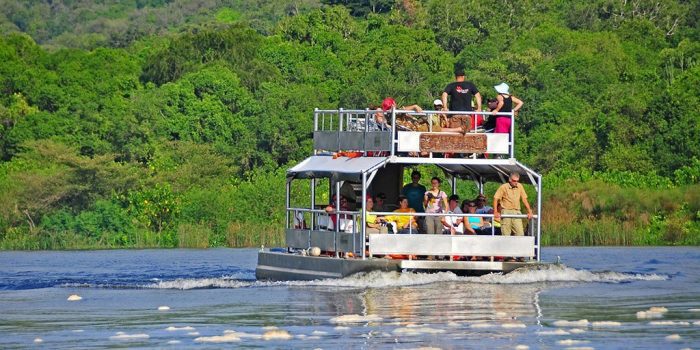
Murchison Falls National Park in the northwest is Uganda’s largest and oldest protected area, spanning 3,890 square kilometres and straddling the Victoria Nile. Lions, elephants, buffaloes, leopards, giraffes, and enormous crocodiles all call this park home. The boat cruise up the Nile to the base of the falls, where the entire river squeezes through a seven-metre gorge and drops 43 metres in a thunderous cascade, is one of the great wildlife experiences in Africa. I strongly recommend stopping at Ziwa Rhino Sanctuary on your way to Murchison, where you can track wild white rhinos on foot with armed rangers, the only place in Uganda where this is possible.
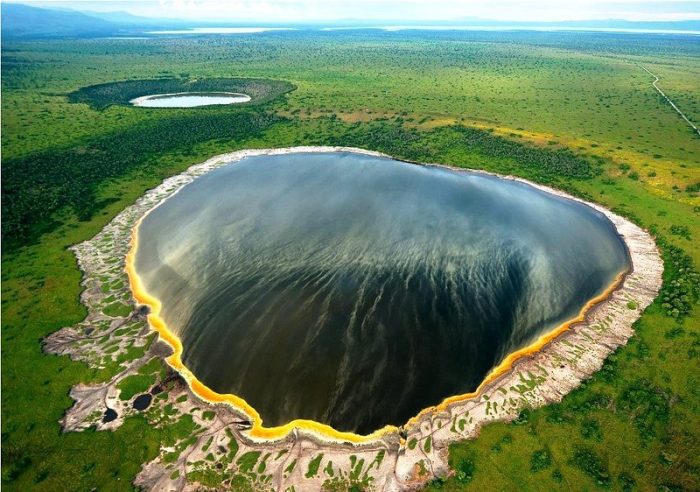
Queen Elizabeth National Park is Uganda’s most visited game park, spanning savannahs, wetlands, crater lakes, and tropical forests and home to 95 mammal species and over 600 bird species. The famous Ishasha sector in the south of the park is one of only two places in the world where lions habitually climb fig trees, draping themselves across branches during the heat of the afternoon in a sight that regularly stops visitors cold. The Kazinga Channel boat safari is another unmissable experience, you drift at water level past enormous hippo pods, crocodiles, and dense colonies of waterbirds.
For Chimpanzees and Primates
Kibale Forest National Park holds the highest density of primates in the world and is the best place in East Africa to track chimpanzees. A chimpanzee tracking permit costs $250 per person in 2026. The forest is also home to red-tailed monkeys, grey-cheeked mangabeys, olive baboons, and the rare L’Hoest’s monkey, primates you will not find in the open savannah parks.
For Remote, Crowd-Free Adventure
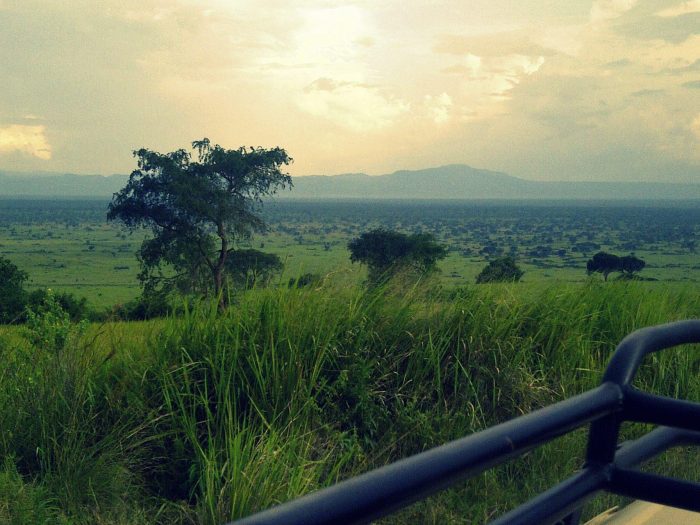
Kidepo Valley National Park in Uganda’s far northeast is the closest thing this country has to a true wilderness frontier. It has been ranked among the top ten safari parks in Africa in 2026 for its remote character, massive buffalo herds, and the fact that you can spend entire days on a game drive without seeing another vehicle. Getting there is a genuine commitment, a very long drive from Kampala or a charter flight, but visitors who make that journey consistently describe it as the most raw and authentic safari experience in Uganda.
WHAT FIRST-TIMERS GET WRONG ABOUT UGANDA’S ROADS
This is the piece of knowledge I most wish I had before my first Uganda safari, and the advice I now give most emphatically to anyone planning their trip. Uganda looks compact on a map. It is not. Road transfer times between parks are consistently two to three times longer than any digital mapping tool will tell you, and this reality has the power to wreck an itinerary that looks perfectly sensible on paper.
The drive from Kampala to Bwindi Impenetrable National Park takes between eight and ten hours on roads that wind through steep, hilly, and often unpaved terrain in the southwest. The journey between Kibale Forest and Queen Elizabeth is around three hours. Reaching Kidepo Valley from Kampala is a full day of driving in each direction. I have met travellers who planned a five-day Uganda itinerary covering three or four parks and arrived at each destination too exhausted to properly enjoy any of it. Do not make that mistake.
A minimum of eight to ten days is my strong recommendation for a first Uganda safari. A well-paced circuit covering Murchison Falls, Kibale Forest, and Bwindi works beautifully within ten days and leaves you genuinely energised at each stop. For travellers with limited time, domestic charter flights operated by AeroLink and Bar Aviation connect Entebbe to airstrips near all the major parks. A one-way charter from Entebbe to Bwindi costs approximately $350 per person and saves a full day of driving each way. It is money very well spent if your schedule is tight.
One more point that is non-negotiable: all park roads and the tracks leading to them require a proper 4WD safari vehicle with adequate ground clearance. Saloon cars and standard two-wheel drive vehicles are not suitable and may be turned back at park gates. Every reputable local operator runs a fleet of proper 4WD Land Cruisers. Confirm this before you book with anyone.
IS UGANDA EXPENSIVE TO VISIT?
Uganda is not a cheap safari destination. The gorilla permit alone at $800 per person makes it one of the pricier first safari experiences in East Africa. That said, Uganda is considerably more affordable than Rwanda for an equivalent gorilla trekking trip, and the breadth of what you can experience across ten days, gorillas, chimpanzees, tree-climbing lions, Nile boat safaris, and the Shoebill stork, represents genuine value for the quality of wildlife on offer.
When I first started researching Uganda safaris, I was surprised by the total cost. But once I understood where the money goes, into conservation, ranger salaries, community benefit programmes, and the infrastructure that protects the habituated gorilla families, I felt entirely differently about it. The permit price directly funds the Uganda Wildlife Authority’s work on the ground, and without that funding, the habituation programmes would not exist.
Gorilla Habituation Experience (4 hours, max 4 people): $1,500 per person
Chimpanzee Tracking, Kibale Forest: $250 per person
Murchison Falls Park Entry: $45 per person per day
Queen Elizabeth Park Entry: $40 per person per day
Safari 4WD with driver-guide: $150 to $200 per day
Charter flight Entebbe to Bwindi (one way): ~$350 per person
Budget lodge outside park: $80 to $150 per night
Mid-range tented camp: $200 to $400 per night
Luxury lodge inside park: $500 per night and above
Single-entry Uganda e-visa: $50 USD
Guide tipping: $10 to $15 per person per day
Private safaris offer considerably better value than group tours for Uganda specifically, because the flexibility to control your timing, pace, and park circuit around the gorilla trek day makes a significant difference to the quality of the experience. Private safaris typically start at around $400 per person per day as a baseline figure, rising with accommodation quality. For families and groups of friends, sharing a private vehicle and splitting the daily vehicle cost makes this tier very accessible.
One practical financial tip I learned the hard way: bring US Dollar notes printed after 2009. Local forex bureaus routinely reject older bills and any notes that are torn, stamped, or visibly wrinkled. This catches a significant number of first-time visitors off guard, particularly Americans who pull notes from an old travel stash. Check your bills before you leave home.
WHAT TO PACK FOR A UGANDA SAFARI
Packing for Uganda is more specific than for a standard East African safari, almost entirely because of the gorilla trekking component. The forest environment at Bwindi is steep, muddy, wet, and cool, it is nothing like the open savannah experience at Murchison Falls or Queen Elizabeth, and your gear needs to reflect that difference.
Here are the items I consider genuinely essential, based on what made the biggest difference on my own treks:
- Waterproof, ankle-supporting hiking boots, the single most important item you will pack. A deep lug sole prevents slipping on steep muddy terrain. Break them in thoroughly before you travel; blisters on a six-hour Bwindi trek are a serious problem that ruins the entire experience.
- Lightweight gardening gloves, almost nobody brings these and almost everyone wishes they had. They protect your hands from stinging nettles and thorny vines when gripping vegetation on steep sections of trail. Buy them before you leave home rather than relying on finding them in Kampala.
- Packable waterproof rain jacket with hood, Bwindi is a rainforest. Rain can come at any time of year and often without warning. A waterproof jacket is not optional gear here; it is a necessity.
- Long-sleeved shirts and long trousers in dark, earthy colours, khaki, green, and brown are ideal. Camouflage clothing is prohibited by law in Uganda. Do not wear black or navy, as these colours attract tsetse flies.
- Long hiking socks, pull your trouser hems down over the top of your socks before entering the forest. This single action closes the most common entry point for safari ants, which are tiny, numerous, and bite with impressive determination.
- Face mask, required by law during your time with the gorilla family. Mountain gorillas are highly susceptible to human respiratory diseases. Pack at least two or three masks per trek day.
- High-DEET insect repellent, essential in all park environments across Uganda. Apply to exposed skin before any outdoor activity, particularly from dusk onwards.
- Soft-sided duffel bag, domestic charter flights have strict baggage limits (typically 15 kg checked, 5 kg carry-on) and require soft-sided bags. Hard-shell suitcases cannot be loaded onto small bush planes. This is not flexible.
- Universal plug adapter, Uganda uses Type G plugs (the UK three-pin standard) at 240V and 50Hz. Visitors from North America and much of Europe will need an adapter.
- Portable power bank, electricity in remote lodges can be solar-dependent and limited to certain hours. A good power bank keeps your camera and phone charged through long game drive days.
- Energy bars and adequate water, a gorilla trek can last anywhere from thirty minutes to eight hours. Carry enough food and water to sustain yourself for a full day regardless of what your operator tells you about average trek durations.
MUST-SEE WILD ANIMALS IN UGANDA
Uganda’s wildlife is extraordinary for such a compact country, spanning mountain gorillas in ancient rainforests, classic Big Game on open savannahs, and over 1,000 bird species across wildly varied ecosystems. It is one of the only places in the world where you can trek to see mountain gorillas in the morning and watch tree-climbing lions on a game drive the same week. Here is a guide to the key species and where to find them.
Primates
- Mountain Gorilla, found only in Bwindi Impenetrable National Park and Mgahinga Gorilla National Park. Uganda holds more than half the world’s remaining population of around 1,000 individuals. Sightings during permitted treks are not guaranteed but success rates are consistently high because rangers track the family’s location at dawn before the trekking group departs.
- Chimpanzee, best experienced in Kibale Forest National Park, which holds the highest density of chimpanzees in East Africa. Also present in Budongo Forest within Murchison Falls and in Kyambura Gorge within Queen Elizabeth National Park.
- Red-tailed Monkey, one of the most commonly spotted primates in Kibale Forest, easily identified by the white spot on its nose and the vivid copper-coloured tail from which it takes its name.
- Golden Monkey, a bamboo-feeding primate found only in Mgahinga Gorilla National Park on the Ugandan side. A separate permit is required, the trek is shorter and less strenuous than gorilla trekking, and encounters are very rewarding.
- Black-and-White Colobus, a large, striking monkey with a long white mantle and dramatic black-and-white colouring. Found in forested areas including Bwindi and Kibale and commonly seen from lodge terraces in both parks.
- Olive Baboon, widespread across most savannah parks. Entertaining to observe but persistent around lodge perimeters, keep food and belongings secured at all times.
Classic Big Game
- African Lion, present in both Murchison Falls and Queen Elizabeth National Parks. The Ishasha sector of Queen Elizabeth is one of only two places in the world where lions regularly climb fig trees, an extraordinary behaviour that makes this sector a must-visit. Sightings in the tree canopy during midday game drives are common but not guaranteed.
- African Elephant, seen regularly throughout Murchison Falls and Queen Elizabeth. Uganda’s elephant population is substantial and encounters during game drives are frequent, often at very close range.
- Cape Buffalo, present in all major savannah parks in large herds. Considered by many experienced guides to be the most dangerous animal in Africa to encounter on foot. On a game drive, however, watching a large herd move across open grassland is one of the classic Uganda safari experiences.
- Leopard, present in both Murchison Falls and Queen Elizabeth but genuinely elusive. Leopard sightings should always be treated as a bonus rather than an expectation. If you do see one, particularly at dusk draped across a branch above a dry riverbed, you will understand immediately why people come back to Uganda again and again.
- Hippo, seen in enormous numbers on both the Kazinga Channel boat safari in Queen Elizabeth and the Nile boat cruise in Murchison Falls. Uganda’s hippo populations are among the densest in Africa; close-range encounters from the water are a given rather than a highlight.
- Rothschild’s Giraffe, found in Murchison Falls National Park. One of the rarest giraffe subspecies in the world, with an active translocation and conservation programme based in the park that has dramatically increased their numbers in recent years.
- White Rhinoceros, only found at Ziwa Rhino Sanctuary, a private conservation area on the road to Murchison Falls. This is the only place in Uganda where you can track wild white rhinos on foot accompanied by armed rangers. A morning spent at Ziwa is well worth the detour.
Birds
Uganda is one of Africa’s finest birding destinations with over 1,000 recorded species. The most sought-after is the Shoebill Stork, a prehistoric-looking bird found in the papyrus swamps around Lake Victoria and the Nile delta area within Murchison Falls National Park. Seeing a Shoebill in the wild is considered one of the great wildlife achievements in East Africa. Other highlights include the Grey Crowned Crane (Uganda’s national bird), the Great Blue Turaco, the African Fish Eagle, the African Green Broadbill in Bwindi’s forests, and a remarkable diversity of sunbirds, hornbills, and kingfishers across every ecosystem in the country.
TOP TIPS FOR STAYING SAFE ON YOUR UGANDA SAFARI
Uganda is widely regarded as one of the safest safari destinations in East Africa, and the national parks operate under strong, well-funded security managed by the Uganda Wildlife Authority. That said, there are practical safety considerations every visitor needs to understand before they travel, and some of them are not obvious from brochures or booking websites.
Road safety is your primary practical concern, not crime, not wildlife, not political instability. The roads between Uganda’s national parks can be steep, unpaved, and demanding in ways that take first-time visitors completely by surprise. The most serious incidents on Uganda safaris are road-related. All transfers should happen exclusively during daylight hours. Never accept road travel between parks after dark, regardless of what any operator proposes. A strict daylight-only driving policy from your safari company is the single most important safety measure available to you.
Wildlife safety inside the parks is managed by experienced rangers and guides with decades of combined knowledge. You will never be permitted out of your vehicle during a game drive except at designated safe areas. Gorilla treks maintain a mandatory seven-metre distance from the animals at all times, and your guide carries a radio with direct park emergency protocols. Wildlife attacks on tourists in Uganda are extremely rare and almost exclusively occur when rules are broken. Follow your guide precisely and you will be perfectly safe.
In urban areas, Kampala, Entebbe, and around busy tourist stops, standard precautions apply. Petty crime including pickpocketing, bag snatching, and overcharging can occur in these environments. Keep valuables out of sight, do not walk alone after dark in unfamiliar areas, and use transport arranged through your operator or hotel rather than unmarked vehicles. Once you are inside the parks, these concerns are essentially irrelevant.
Food and water safety throughout your trip is worth taking seriously. Stick to bottled water everywhere, avoid cold foods and raw salads in remote safari areas, and apply insect repellent every evening regardless of how comfortable the lodge terrace feels. A compact first aid kit with rehydration salts, antiseptic, and any prescription medication you require is worth carrying in your daypack.
HOW TO CHOOSE A REPUTABLE TOUR OPERATOR IN UGANDA
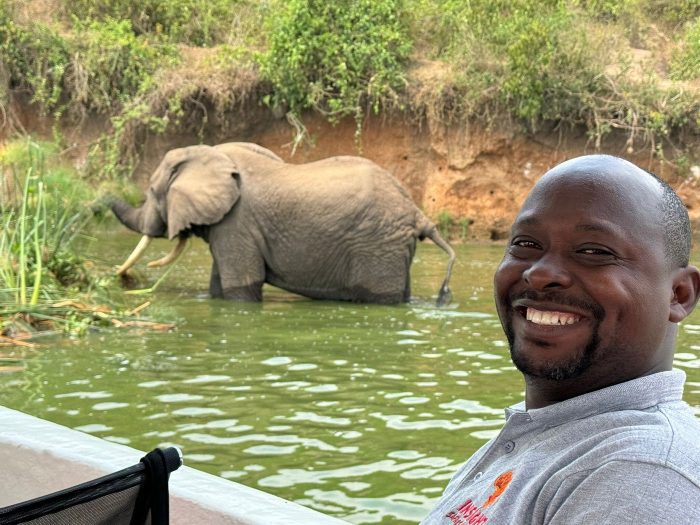
Choosing the right tour operator for a Uganda safari is one of the most consequential decisions you will make during the planning process, and it matters considerably more here than in many other safari destinations. Your operator is not just organising logistics, they are your primary interface with the Uganda Wildlife Authority, your gorilla permit guarantor, and your on-the-ground support for anything that goes sideways during the trip.
I would always recommend booking with a locally based, licensed Ugandan tour operator rather than routing your booking through an international travel agency that then subcontracts everything to a local company anyway. International intermediaries typically add 20 to 40 percent above the actual cost of your safari without providing meaningful additional value. A direct relationship with a Ugandan operator means better pricing, faster and clearer communication, and a team with current, on-the-ground knowledge of park conditions, road access, permit availability, and which sectors of Bwindi are performing best in a given season, knowledge that no overseas desk agent can replicate.
When evaluating operators, I look at four things above all others:
Reviews. Read them carefully and in volume. Look for comments about guide quality, vehicle condition, how the company handled things when something went wrong, and whether the trip delivered what was promised. TripAdvisor and Google reviews are both worth combing through in detail.
Guide quality. Ask specifically about the guides assigned to your itinerary. Are any of them specialists in birding, big cats, or primate behaviour? Can they provide a guide with experience working with children if you are travelling as a family? A great guide is the difference between a good Uganda safari and one you will spend years trying to describe to people who were not there.
Vehicle fleet. Ask for photographs of the vehicles used and confirm they are proper 4WD models with pop-up roofs for game drives, adequate ground clearance for park roads, and a current maintenance schedule. Do not accept vague reassurances. Uganda’s terrain demands capable vehicles and a breakdown on a remote park track is a situation you want to avoid entirely.
Responsiveness and personal care. How quickly does the company reply to your initial enquiry? Do they take genuine time to understand your specific interests, travel dates, group composition, and fitness levels, or do they send a generic package? Booking a Uganda safari is a significant financial investment, and the quality of care you receive during planning is almost always a reliable indicator of what you will experience on the ground.
FAQS
How far in advance should I book a Uganda gorilla safari?
For peak dry season travel in June through September and December through February, book four to six months in advance at an absolute minimum, and earlier if your dates are fixed. For the Gorilla Habituation Experience, which limits groups to four people and is consistently in very high demand, twelve months of lead time is standard practice. For the wet season months of March to May and October to November, two to three months is generally sufficient, though popular trekking sectors in Bwindi can still sell out even during low season.
Is Uganda safe to visit for safari in 2026?
Yes. Uganda’s national parks are confirmed at Status Green by the Uganda Wildlife Authority and Uganda Tourism Board as of 2026. All major safari circuits including Bwindi, Queen Elizabeth, and Murchison Falls are well-managed and located far from any border tension areas in the north and west of the country. Following Uganda’s January 2026 general election, the Uganda Tourism Board confirmed that all tourism corridors remain fully open and unaffected. Road safety between parks is the primary practical concern for visitors, and it is managed effectively by choosing a reputable operator with a daylight-only driving policy.
What level of fitness is needed for gorilla trekking?
A reasonable level of general fitness is required. Gorilla treks in Bwindi can last anywhere from thirty minutes to eight hours of walking on steep, muddy, and uneven forest terrain at elevations between 1,160 and 2,600 metres. You do not need to be a seasoned hiker, but you should be comfortable walking uphill for several hours and confident on uneven ground. Porters available at the trailhead for around $15 to $20 are recommended for anyone uncertain about the physical demands. Ranger teams typically assign trekking groups to gorilla families partly based on fitness level, so those with mobility concerns are often placed with families that require shorter approaches.
Can I combine Uganda and Rwanda in the same trip?
Absolutely, and this combination is very popular. Many travellers pair gorilla trekking in Bwindi with a second gorilla trek or golden monkey tracking in Volcanoes National Park across the border in Rwanda. The drive between Kisoro in Uganda and Musanze in Rwanda takes approximately two to three hours and the border crossing is straightforward. The East African Tourist Visa at $100 USD covers both countries under a single application, simplifying the logistics considerably.
When is the worst time to visit Uganda for a safari?
March to May is the heaviest rainfall period and the most challenging time for gorilla trekking specifically, due to slippery steep trails and some access road difficulties in the southwest. That said, Uganda does not have a month where safari activities are entirely impractical. Birdwatchers actively prefer the wet season. Game viewing in the savannah parks is rewarding year-round. The key is to match the season to your specific activity priorities rather than avoiding Uganda outright during any particular window.
Do I need to tip my safari guide and gorilla trek porters?
Tipping is not mandatory but is a meaningful and appreciated contribution. The standard expectation for safari guides is $10 to $15 per person per day, with an additional communal amount for drivers, cooks, and camp staff. Porter tips for gorilla treks are typically $15 to $20 per trek. The gorilla trackers and rangers who go out before dawn to locate the family’s position before your trekking group departs can also be tipped separately, $10 per person is appreciated and goes directly to the conservation workers who make the experience possible.
Uganda is the kind of destination that changes the way you think about wildlife travel. There is nothing quite like standing in an ancient rainforest and making eye contact with a mountain gorilla, and nothing quite as satisfying as having planned the trip well enough to fully appreciate that moment when it arrives. I hope this guide helps you get there prepared.